 UK
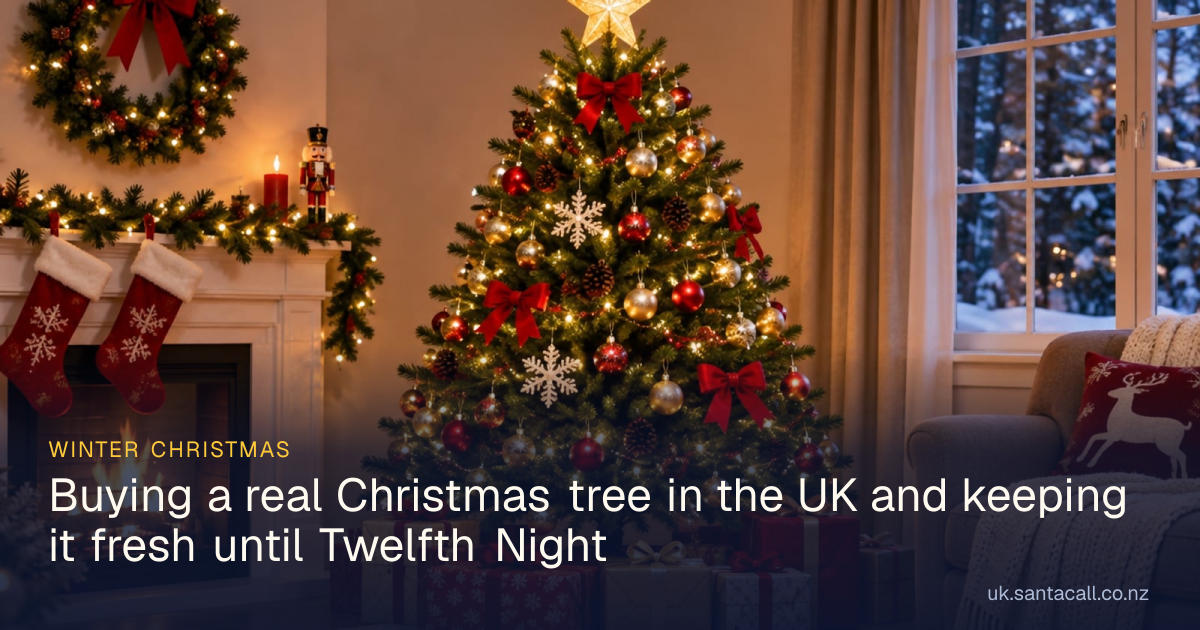
There is nothing quite like the smell of a real Christmas tree in the house. Buying one is a family outing in its own right, and with a little care it will still look good when the decorations come down in January.
Which tree to choose
The British Christmas Tree Growers Association describes the Nordmann fir as the most popular Christmas tree in the UK, with excellent needle retention and strong branches that hold baubles well. It is the safe choice for a home with central heating.
Other good options:
- Fraser fir: a lovely scent and good needle retention, with a neat pyramid shape.
- Noble fir: bluish-green needles and stiff branches that cope with heavier decorations.
- Norway spruce: the traditional British tree with the strongest Christmas smell, but it needs regular watering to keep its needles.
Measure first
Measure the ceiling height and the floor space before you go, and leave room for the stand and a star or angel on top. A tree always looks smaller outdoors than it does in your front room.
When to buy
Most families buy in the first two weeks of December. A fresh tree bought then and looked after properly should last well past Christmas. If you want to put it up on 1 December, buy from a farm or a grower who has cut it recently, rather than one that has sat in a car park since November.
Choosing a good one
Run a branch gently through your hand. A fresh tree keeps its needles. Lift it and drop the base on the ground: a few brown needles from the inside are normal, a shower of green ones is not. Check the trunk is straight enough to sit in your stand.
Going to a farm where the children can choose their own and watch it being cut is one of the nicest December outings there is. Wrap up warm and wear wellies.
Getting it home and set up
Most sellers will net the tree for you, which makes it far easier to carry and to get through the front door. At home:
- Cut about 3cm off the base before you bring it in, to open up the trunk so it can drink.
- Stand it in a bucket of water outside or in a cool garage for a day if you can.
- Use a stand that holds water, and fill it straight away.
- Keep it away from radiators, fires and wood burners. Heat dries a tree out and makes it drop.
Keeping it fresh
Check the water every day. A tree can drink a surprising amount in the first week, and once the base dries out it seals over and stops drinking. Giving the children the job of "tree waterer" with their own small jug works well, as long as a grown-up checks the level too.
A well-watered tree is also a safer tree: Electrical Safety First warns that real trees can catch fire faster than fire-retardant artificial ones, so keep it watered and switch the lights off when you go out and at night.
When Christmas is over
Many councils collect real trees in January or set up drop-off points so they can be shredded and composted. Some local charities and hospices run tree collections for a donation. Check your council's website for the dates in your area.
While the tree is still up and the lights are on, it makes the perfect backdrop for a phone call from Santa. There is something about a child answering Santa next to the tree that makes for a very good photo.
Common questions
What is the most popular real Christmas tree in the UK?
The Nordmann fir, which the British Christmas Tree Growers Association describes as the most popular, with excellent needle retention.
How do I stop my real Christmas tree dropping needles?
Cut about 3cm off the base before bringing it in, stand it in a stand that holds water, top it up every day and keep it away from radiators and fires.
When should I buy a real Christmas tree?
Most families buy in the first two weeks of December. A freshly cut tree that is watered every day should last well past Christmas.
What do I do with a real tree after Christmas?
Many councils collect real trees in January or have drop-off points for composting, and some local charities and hospices collect them for a donation.